
Deep-fried foods are among the most beloved items on any menu, from golden French fries to crispy tempura, but the quality and management of your frying oil makes or breaks both kitchen performance and long-term profitability.
At INNOVEA, we help restaurants and commercial kitchens assess and rethink how they manage frying oil, so they can serve healthier, more consistent food with less waste, lower cost, and a stronger sustainability footprint.
What Is Oil Management?
Oil management refers to the full lifecycle control of frying oil in a professional kitchen, from the moment fresh oil is poured into the fryer until it is responsibly disposed of or recycled.
It encompasses oil selection, temperature control, regular filtration, removal of food particles, monitoring of oil degradation, extending oil lifespan, and proper disposal. This end-to-end approach is often described as Total Oil Treatment (TOT): a systematic way of treating frying oil as a managed production input rather than a disposable expense.
Why Oil Management Matters
When frying oil is heated repeatedly, complex chemical reactions occur. Heat, oxygen, moisture, and food particles gradually break down the oil’s molecular structure, accelerating deterioration. According to the 3rd International Symposium of Deep Fat Frying, “there is no other kind of food which is exposed to harsher thermal conditions than deep frying oil”, with these reactions provoking significant changes in sensory, physical, chemical, and nutritional properties.
Over time, poorly managed oil leads to:
- Reduced food quality — degraded oil penetrates food more easily, making it greasy rather than crisp
- Off-flavours and odours — rancidity and bitterness transfer directly to the food
- Accumulation of harmful compounds — including polycyclic aromatic hydrocarbons (PAHs) and acrylamides (AAs), both recognized as likely carcinogens by international health agencies
- Higher oil consumption and cost — degraded oil needs replacing sooner, driving up expenses
- Poorer kitchen air quality — frying fumes from deteriorated oil expose kitchen staff to elevated health risks, including documented associations with lung cancer
Effective oil management significantly reduces and delays these effects, protecting both the food on the plate and the people behind the pass.
Four Best Practices for Oil Management
- Monitor Oil Quality Frequently
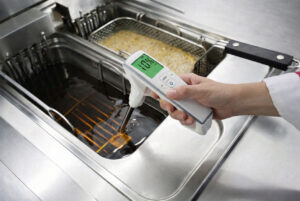
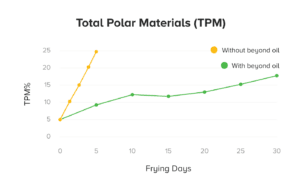
Regularly assess oil by appearance, smell, and frying performance. Use quick sensory checks, gritty or rancid taste, excessive foaming, and heavy smoke development are all warning signs. For more objective monitoring, TPM (Total Polar Material) devices provide real-time readings that eliminate guesswork about when to refresh or change the oil, with documented savings of over €2,500 per restaurant per year in one commercial study. Filter throughout service and remove crumbs and debris that catalyse oil breakdown.
“No one wants floating charcoal in their oil.”
- Control Frying Temperature
Maintain consistent temperatures within the optimal range for your products, ideally between 150°C and 175°C, and generally not exceeding 180°C. Avoid unnecessary heat spikes: excessive temperatures accelerate oxidation, increase the formation of harmful compounds, and shorten oil life. Always preheat gently, and reduce temperature during extended breaks in service.
“Here, ‘smoking hot’ is actually a bad thing.”
- Filter & Clean Strategically
Daily filtration removes the food particles that act as catalysts for oil breakdown. It also creates a natural opportunity to inspect and maintain your fryer, extending equipment longevity and preventing residue build-up from one service to the next. Clean fryers and clean oil work in tandem.
“Better 5 minutes every day than 1 hour every week.”
- Choose Quality Oil & Technology
Select a frying oil with a high smoke point and appropriate stability for your menu. Pair it with a smart filtration approach, whether mechanical (internal or external filtration systems) or biochemical (compounds such as powders or gels that actively bind and extract breakdown products from the oil). The right combination reduces waste, extends oil life, and delivers more consistent flavour and texture across every service.
“The one who wants to travel far chooses the best horse, and takes the best care of it.”
The Bigger Picture: Health & Sustainability
Effective oil management is not only an economic decision, it is a health and ethical one. Improperly maintained oil generates elevated levels of oxidized compounds, PAHs, and acrylamides, which affect the taste and safety of the food itself. For kitchen staff working in close proximity to fryers for long hours, repeated exposure to deteriorated frying fumes has been classified by the WHO’s International Agency for Research on Cancer (IARC) as a likely carcinogen (Category 2A).
Better-managed oil means cleaner air, safer working conditions, and food that meets rising consumer expectations for both quality and transparency.
On the sustainability side, strategic oil management directly reduces total oil consumption, lowers the frequency of disposal, and cuts the CO₂ emissions tied to oil production, transport, and waste processing.
INNOVEA’s Approach
At INNOVEA, we combine expertise in Oil Management and Treatment with hands-on kitchen assessment and practical guidance. We integrate industry-leading solutions, including Beyond Oil, a filtration technology clinically shown to reduce acrylamide and PAH formation even after extended frying cycles, so your kitchen can deliver:
– Fresher-tasting fried foods, consistently
– Longer service life for frying oil
– A cleaner, safer kitchen environment for your team
– Lower operational costs and reduced waste
Want to improve your staff’s work environment, raise the quality and healthiness of your product, and potentially cut costs and oil consumption at the same time?
Contact us for a demo or a kitchen assessment tailored to your operation.